Menu
ADV Motorcycle Training USA
ADV Motorcycle Training in the United States
Adventure riding demands more than basic off-road skills. Big bikes, variable terrain, fatigue, weather, and real-world consequences mean riders need practical, experience-based instruction, not just practicing drills around cones in a field.
I offer ADV motorcycle training in locations across the United States, focused on helping adventure riders develop the skills, confidence, and decision-making needed to ride safely and effectively on large adventure motorcycles.
Whether you ride a BMW GS, Africa Twin, Yamaha Ténéré, KTM Adventure, or similar platform, this training is designed for real ADV riding, not motocross or enduro shortcuts.
WHAT IS ADV MOTORCYCLE TRAINING?
ADV motorcycle training focuses on riding large adventure motorcycles in the conditions they are actually used. It addresses the realities of mixed terrain, long days, fatigue, and the consequences that come with riding heavy motorcycles away from pavement.
Rather than isolating individual techniques, the training looks at how control, balance, traction, and decision-making work together across changing surfaces and conditions.
Common areas of focus include:
Gravel, dirt, sand, mud, and uneven terrain
Low-speed balance and control on large motorcycles
Hill climbs and descents
Traction management and braking on heavy bikes
Line choice and risk assessment
Fatigue management and riding efficiency
The emphasis in Bret’s training is not speed. It is consistency, control, and how to make sound decisions in real riding environments.
WHO IS THIS TRAINING FOR?
This training is intended for riders who already have experience riding motorcycles and are expanding their riding into off-pavement or mixed-terrain travel.
It is most often attended by:
Riders on mid-weight to large adventure motorcycles
Experienced street riders transitioning to dirt and gravel
ADV riders preparing for longer or more remote trips
Riders looking to reduce unnecessary crashes, drops, and fatigue
This is not a licensing course, and it is not a race or performance school. The focus is on practical, repeatable skills that apply immediately to real riding.
WHERE IS THE TRAINING HELD?
ADV motorcycle training is conducted across the United States in locations chosen for terrain, seasonal conditions, and relevance to real-world adventure riding. Bret’s courses are hosted in ADV-appropriate riding areas that reflect what riders actually encounter on trips, such as gravel roads, mixed surfaces, and variable traction. Training commonly rotates through:
Virginia
Georgia
Idaho
Oregon
Washington
Utah
Because locations change with weather and terrain availability, riders from anywhere in the country can attend without booking international travel or encountering complex logistics.
What Makes This Training Different
Bret’s ADV training is built around the realities of riding large motorcycles, not adapting techniques from smaller bikes or competition or race-style disciplines.
Instruction centers on:
Large-bike dynamics
Real terrain with some uncontrolled layouts
Risk assessment and decision-making skills
Techniques that remain effective when tired, loaded, or traveling
Bret’s priorities are clear. He teaches:
Efficiency over aggression
Control over speed
Understanding over memorization
The goal is to help riders stay upright, conserve energy, and make better decisions, especially if conditions deteriorate or the margin for error narrows. This is why he always says Attitude Matters.
WHAT SIZE MOTORCYCLE DO I NEED?
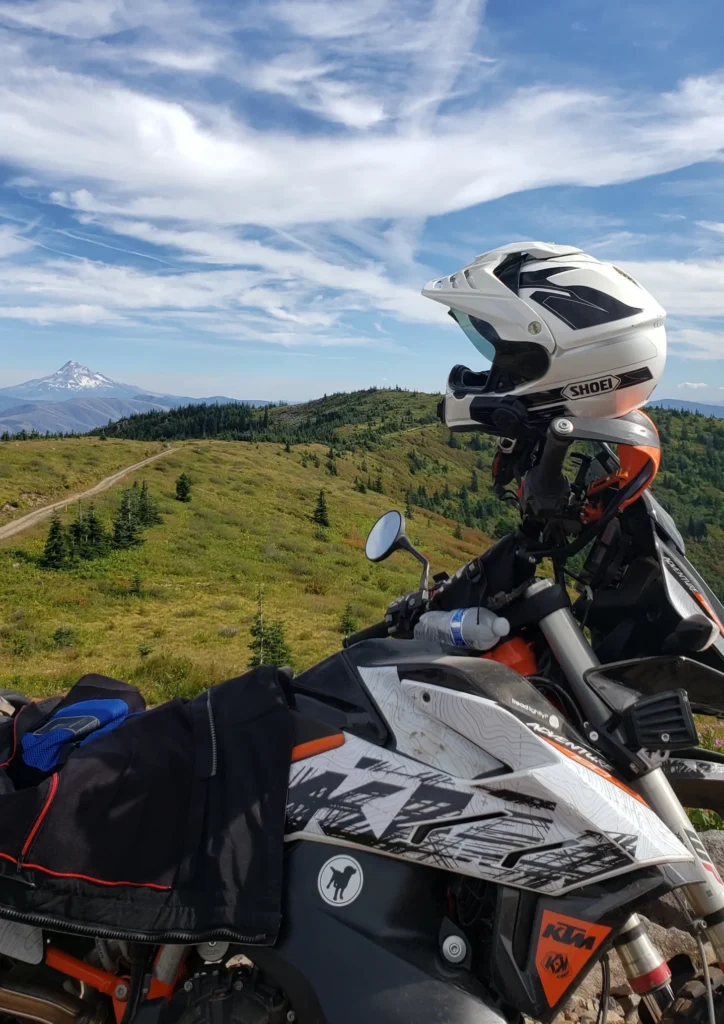
Bret’s ADV motorcycle training is designed primarily for mid-weight to large adventure motorcycles like the BMW GS, Africa Twin, Yamaha Ténéré, KTM Adventure, and similar platforms weighing anywhere from 400 to 600+ pounds.
The training specifically addresses the unique challenges of riding heavy adventure bikes off-road. That being said, all bikes are welcome in our courses. If you want to take your favorite motorcycle off-road, you’re welcome here.
Because the course is designed around the handling characteristics and limitations of larger, heavier motorcycles, those riding smaller or lighter bikes may actually find some obstacles easier to navigate. If you’re concerned about whether you can handle a heavy adventure bike off-road, bringing a smaller bike can be a great way to build confidence and skills before moving up to a larger platform.
Keep in mind, some bikes with lower ground clearance may encounter clearance issues on more technical sections. While this won’t prevent you from learning, it may prevent you from participating on all challenges presented during class.
ADV Motorcycle Training Locations (United States)
Bret’s courses operate in five U.S. states. Each offers distinct terrain that helps you build relevant skills you’ll use on your upcoming ADV rides:
Idaho: High Desert & Rocky Backcountry
The Idaho training uses mixed terrain that mimics long rides through the remote backcountry of the western US (east of the Cascades). You’ll learn to manage traction on shifting surfaces and climb/descend loose hills confidently.
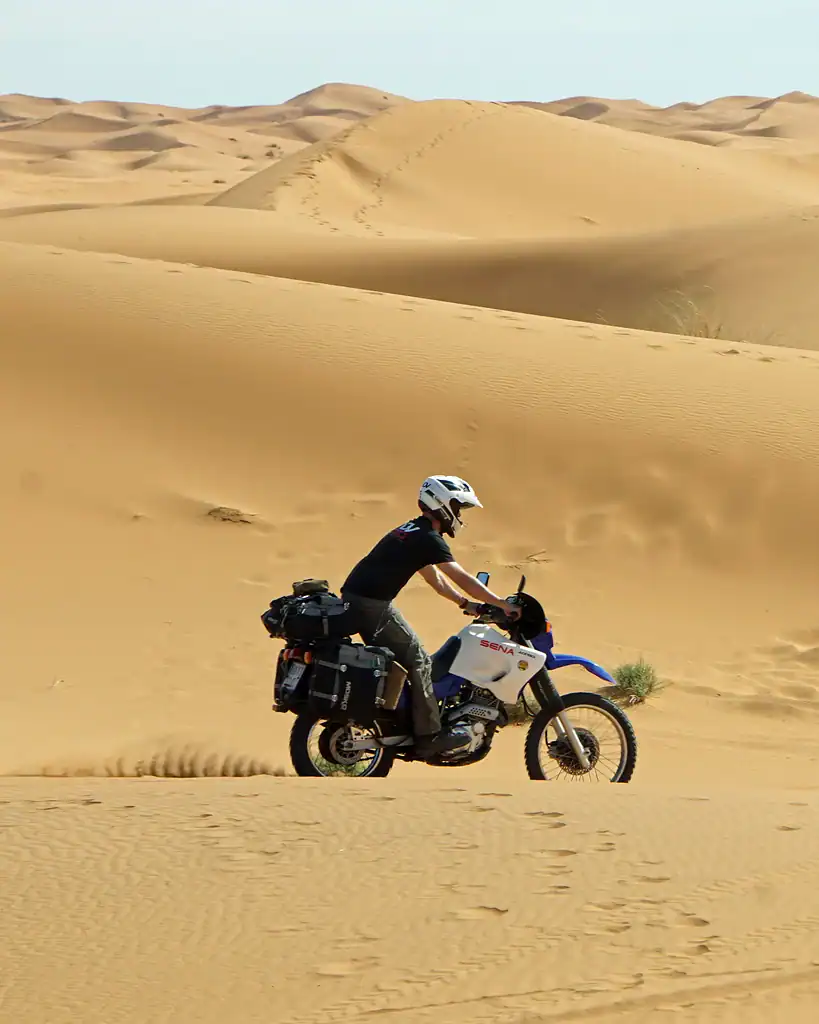
You’ll experience a hot desert landscape with sand and loose surfaces, long gravel roads, steep loose hills and washboard, occasional sagebrush and dry washes, similar to sections of the Idaho Backcountry Discovery Route (IDBDR).
Oregon: Mixed Backcountry & Forest Roads
Oregon’s landscape varies from open high desert to forested routes and maintained trail systems. This variety gives riders exposure to both easy and moderately technical terrain, similar to sections of the Oregon Backcountry Discovery Route (ORBDR).
You’ll experience dirt roads through remote public lands, some dry high-desert sections, forest roads with light roots and mixed softer surfaces, and occasional rocky sections and dried mud ruts.
Washington: Forest & Mixed Gravel
Washington terrain ranges from forested areas perfect for low-speed technical work to dirt and gravel roads that build confidence. The training locations are similar to parts of the Washington Backcountry Discovery Route (WABDR).
You’ll experience pine forests with mixed dirt/gravel surfaces, forest service roads with roots and occasional washouts, grass training fields with custom obstacles, and ruts.
Georgia: Red Clay & Mixed Forest Trails
Georgia’s terrain challenges riders to manage traction on clay and natural surfaces (especially during spring rains), helping you develop advanced balance and traction skills that directly translate to trail and backcountry riding.
You’ll experience red Georgia clay that changes traction with weather, wooded single and double-track trails, ruts, logs, and uneven natural features, and open grass fields.
Virginia: Rolling Hills and Mixed Surfaces
Virginia training covers wooded terrain where picking lines, managing balance, and reading subtle changes in surface conditions are essential to confident ADV riding, especially along the Mid-Atlantic Backcountry Discovery Route (MABDR).
You’ll experience tight, winding trails through the woods, grass and open fields, logs, roots, and uneven ground, hills, and changing mixed-traction surfaces.
Training Location
PRIMARY TERRAIN TYPE
WHAT RIDERS ENCOUNTER
SKILLS EMPHASIZED
VIRGINIA
Wooded trails and mixed surfaces
- Tight wooded trails
- Grass and soft soil
- Logs and natural obstacles
- Ruts and uneven ground
- Short, steep hills
Precision control, line choice, obstacle negotiation
GEORGIA
Red clay and wooded trails
- Slick red clay (dry and wet)
- Rutted trails
- Roots and logs
- Rolling hills
- Mixed forest surfaces
Throttle control, balance, traction recovery, body positioning
IDAHO
High desert and rocky backcountry
- Loose sand and gravel
- Sharp embedded rocks
- Steep, loose hill climbs & descents
- Washboard roads
- Open, exposed terrain
Traction management, momentum control, hill techniques, fatigue management
OREGON
Mixed backcountry and forest roads
- Gravel and dirt roads
- High-desert hardpack
- Forest service roads
- Light roots and ruts
- Rolling two-track
Line selection, surface transitions, braking on mixed traction
WASHINGTON
Forest and variable traction
- Pine needle–covered trails
- Forest roads and gravel
- Grass and dirt fields
- Roots and soft ground
- Low-speed technical sections
Low-speed balance, traction awareness, control in reduced grip